A merchant can't afford not to accept the payment methods their clients expect to use, as they will lose a lot of sales
Spain receives millions of tourists, many of whom will want to pay with digital currencies. In the past they brought dollars; now they will come with stablecoins
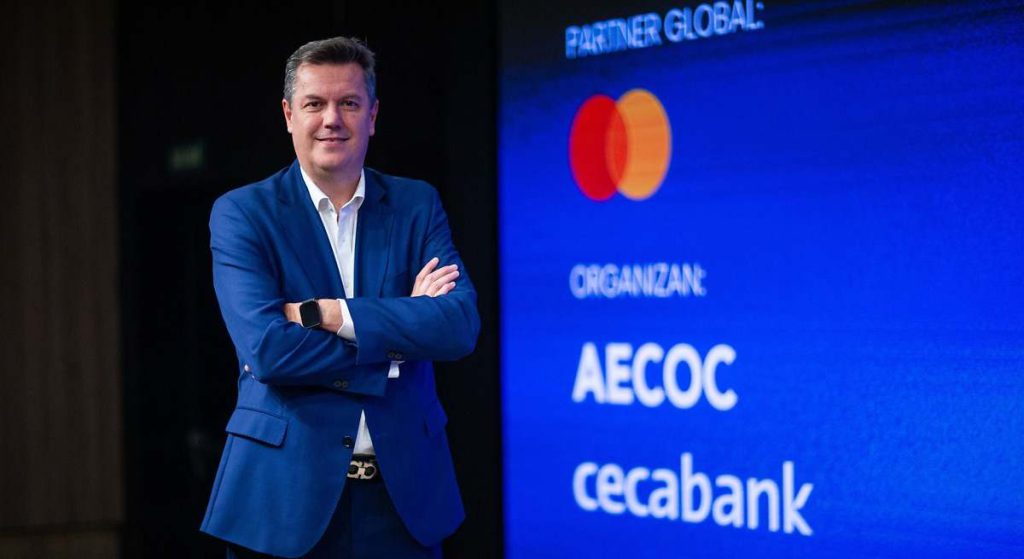
Merchants can't ignore innovation in payments: customers want convenience, security, and speed when buying… or they will go to another store. It is a rapidly changing ecosystem that also helps all types of businesses, big and small, to sell even on Instagram, TikTok, or WhatsApp without even having a website. These opportunities also bring challenges, since the payments world is constantly evolving, even with new “currencies”: stablecoins are already knocking at the door. Cecabank’s Corporate Director of Technology Services, Juan José Gutiérrez, predicts they will enter retail, in an interview conducted during the third Consumer & Retail Payments event organised by AECOC and Cecabank.
What are the main challenges merchants face involving payments?
Merchants provide a service, have a customer who has chosen them, and payment should not ruin that experience. It must be frictionless and secure. And that security has two aspects: ensuring the customer knows that payment has been made and for what amount, and preventing fraud, a key challenge in any transaction.
The retail ecosystem is highly fragmented. How does this situation affect the adoption of innovations?
One of the main elements of payments is universal acceptance. When a payment method is universal and there is a very large critical mass of people who want to use it to pay and to get paid, everything works more smoothly and becomes easier. We have large multinationals such as Visa and MasterCard, as well as others like American Express and Discover, that set standards across the industry. On the account-based payments side, we are building more standards too: the arrival of instant transfers now allows us to create that same layer of added value and standardisation. Operating within this standardised framework of rules, certifications, approvals, and basic services is what enables adoption by larger, smaller, and mid-sized merchants alike. Banks act as the channel through which these solutions reach merchants of any size, from the traditional card terminal with a POS device to e-commerce modules already integrated into platforms such as Magento or PrestaShop.
Is adapting an option for merchants? Can they operate while ignoring payment innovations?
I don’t think they can. People use new payment methods because they are more convenient and provide added value: for example, allowing a customer to buy shoes, a T-shirt or a coat on credit if they don’t have the cash on them, or to split a payment. A merchant that doesn’t offer these options is at a disadvantage. Just as no one today can imagine operating only with cash, merchants can't afford not to accept the payment methods their customers expect to use, as they will lose a lot of sales. This applies even to emerging solutions such as stablecoins or digital currencies. If your customers want to pay that way and it is reasonably secure for you, then you should open up to that need and allow payment.
In rural areas and among certain groups, cash still dominates…
That’s true, and at Cecabank we are also banknote suppliers, in addition to managing electronic and digital payment solutions. Cash occupies a place and it's here to stay. We have seen that, in the event of power outages, people were able to operate thanks to having banknotes on them in the most adverse situations. The ECB is proposing the digital euro to complement, not replace, cash. We say that payments are not “one size fits all”, and that cash and digital payments will coexist based on customer preferences.
What is the risk of not incorporating or properly integrating payment systems?
Payment is the final link in the chain and it must be flawless. In a restaurant, an issue at the payment stage can ruin an otherwise very positive experience and affect customer loyalty. The same happens in retail: a duplicate or declined charge creates stress and mistrust. A poor payment experience can mean the customer won't return.
What would you say is the future of payments in large-scale retail?
We are facing a geo-strategic reality in which the world is breaking up into different blocs, leading to reduced globalisation. An economic weapon such as cutting a country off from SWIFT in a given situation has shattered the long-held idea that, with a Visa or MasterCard and the SWIFT network, you could pay anywhere in the world. Now there will be different payment solutions in different parts of the world that interact with one another, which means that what was relatively simple for merchants is becoming more complex. You will still need Visa and MasterCard, but you will also have to be prepared to accept a wider range of payment types. Some countries have accelerated the emergence of alternative systems, such as Pix in Brazil. If, in the future, we have CBDCs (central bank digital currencies), for example in pursuit of digital euro sovereignty, they will have to be accepted as well. In addition, each payment method will add layers of value, such as point-of-sale financing, instalment payments, and so on. We believe there will not be a single solution that prevails over the rest; instead, different solutions will coexist for different types of merchants, depending also on their customers.
How can innovation help retail and large-scale distribution?
Innovation brings convenience to transactions. For example, we have a product that allows businesses to sell on social media without having a website: simply set the price, the number of units available, and share a payment link. We are facing a new paradigm. Request-to-pay solutions work similarly: professionals who visit a customer’s home can charge without carrying a terminal. In the past, a transfer took one or two days; now it's instant. Payment must be integrated into each experience, because we don’t pay in the same way when refuelling a car, shopping for groceries, or signing up for a digital service.
Does that mean a merchant, large or small, can digitise its sales and compete with Amazon or find its own niche?
Absolutely. They can target their niche and get access to a huge variety of payment methods. In addition, Spain is one of the most advanced countries in terms of payments, with many providers and costs that are far, far lower than in the rest of Europe and, above all, the rest of the world. Fees are lower than in much of Europe because competition for payments is extremely intense.
Fraud is one of the major challenges in payments. How do we tackle it?
By combining expert knowledge and technology. The payer’s institution ensures there is no card fraud, and the acquiring bank protects its client, the merchant. We also use artificial intelligence systems, assigning a score to each transaction, and in Visa or MasterCard payments we combine our score with theirs to make decisions. When a customer is about to make a payment, we analyse where they are, the language, the device they are using, the operating system... If a customer suddenly seems to be using an operating system in Chinese, that's a huge red flag and strong authentication is recommended, because the person does not seem to be who they claim to be, or the transaction may even be rejected. From the merchant’s perspective, the same applies. Regulations have strengthened these controls. Even so, the weakest link is the individual. The fraud we see most today occurs when a third party, using social engineering, convinces the customer to authorise the transaction.
How can payment providers help comply with Verifactu?
One of the greatest successes in this context can be found in the Basque Country, thanks to a regulation that has made it possible to report transactions to the regional tax authority in a way similar to Verifactu. This is done through POS solutions that generate the receipt and send the tax information without requiring merchants to change their software. It has been key for small businesses and is now being rolled out across Spain. New Android POS terminals allow additional value-added applications to be incorporated, such as this service, for tips, bill splitting, and more.
Cecabank is working to help merchants accept stablecoin payments. Will we see this in stores soon?
I think so. In the world of digital currencies there are three categories: CBDCs, currencies issued by a central bank, which we will see in shops once they are launched; stablecoins, which I don't doubt we will also see; and cryptocurrencies, which I don’t think we will see in retail, although there are already crypto ATMs on the street. Stablecoins are digital representations of certain currencies in specific environments. Spain is the second most visited country in the world, and there will be people who want to pay with them. What used to be dollars will now be stablecoins, and these customers often make high-value purchases. So merchants will want to be able to accept them.