The meeting has gathered to more than 120 professionals of the trade, the financial industry, fintechs and experts in fee-paying means to analyse the main challenges of the sector
The use of the IA is expanding from the customisation of the experience of purchase, the automation of processes and the prevention of the fraud towards new trade models agéntico
The meeting has put the focus in the advances of the digital euro towards its pilot phase in 2027, the interoperability between fee-paying European systems as Bizum and Wero, and the new regulatory challenges of the sector
The European ecosystem of fee-paying means goes through a phase of profound transformation, marked by the advances towards a financial greater autonomy, the evolution of the regulatory framework and the incorporation of new technologies that are redefining the relationship between financial institutions, businesses and consumers. The development of the digital euro, the increasing interoperability between fee-paying solutions, the consolidation of the immediate payments and the irruption of the artificial intelligence they pose new opportunities and challenges in the transactions for the set of one the industry. Before this stage, the collaboration between different actors of the chain of payments results fundamental to promote the innovation, strengthen the security and improve the efficiency of the ecosystem.
In this context, Cecabank, leading bank in securities services on the market Iberian and one stop sign shop of fee-paying solutions, reporting and treasury for everything type of financial institutions and corporations, and AECOC, the only business association of the country that gathers to industry and distribution to promote the collaboration and contribute great value to the consumer, have organised the 4th Meeting AECOC-Cecabank of Consumer & Retail Payments, held in the Espacio28 of Cecabank in Madrid under the title “NextGen Payments: innovative and efficient”trends. The meeting has gathered to more than 120 professionals of the trade, the financial industry, fintechs and experts in fee-paying means to analyse the main challenges of the sector, share experiences and know the technology solutions that they are driving its transformation.
During 2026, the sector of the fee-paying means has continued moving forward towards an increasingly digital model, immediate and interconnected. In Europe, legislative advances in the development of the digital euro and the initiatives to promote the interoperability between fee-paying national systems reflect the commitment for strengthening the strategic autonomy and build a more comprehensive and competitive ecosystem. Similarly, the area of the immediate payments and the evolution of the European regulatory framework, with initiatives as PSD3 and the Regulations of Payment services (PSR), are driving new efficiency standards, transparency and security. These advances coincide with a transformation of the consumption patterns and of needs of the trade, that fee-paying solutions demand increasingly agile, flexible and adapted to the different sale service channels. This transformation opens new opportunities for consumers and companies, while poses challenges with regard to authentication, consent, accountability and protection when dealing with the fraud.
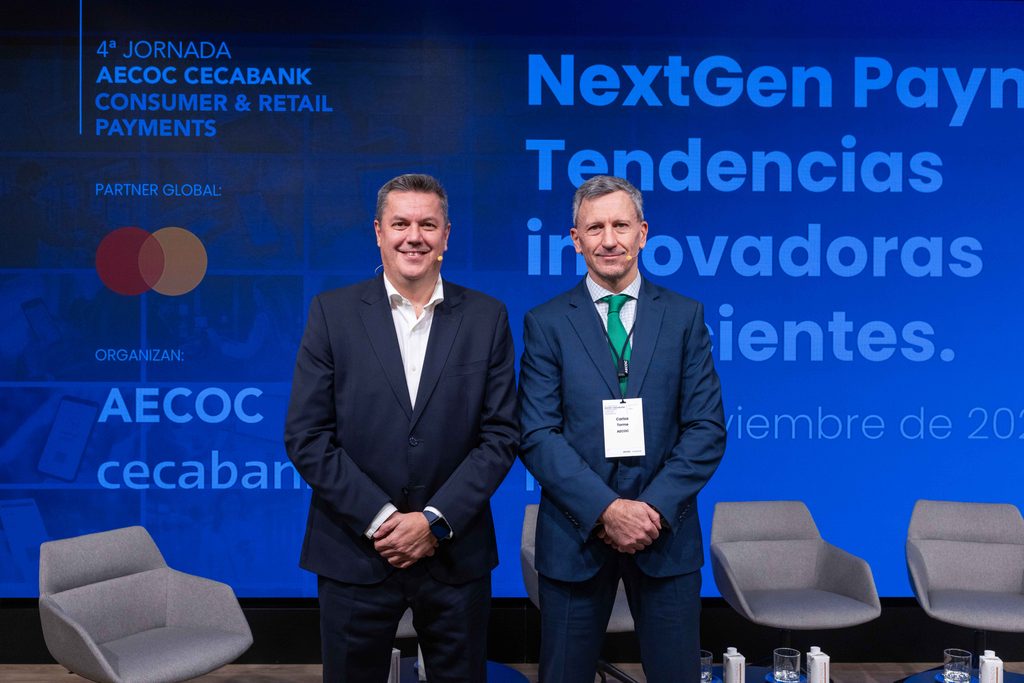
The meeting has had the share of representatives of the Ministry of the Economy, Trade and Company, Banco de España, AEFI, AENPA, ABANCA, Amazon, Tendam, Alsea, Wipay, Diusframi, Ibercaja, Visa, Ant International, Google Cloud, MasterCard, AECOC and Cecabank. Juan José Gutiérrez, corporate director of Payments of Cecabank, and Carlos Torme, Expansión's director of AECOC, have been the ones responsible for give the welcome to the meeting.
The debate has been articulated around four major areas: the evolution of the regulatory framework and the European and national strategy of payments; the new needs of the consumer and of the trade; the technology solutions that they are driving the efficiency and the security of the transactions; and the impact of the artificial intelligence in the future of the fee-paying means. Between the accosted matters emphasise the legislative advances of the digital euro and the preparativos for its pilot phase in 2027; initiatives of interoperability between European systems as Bizum and Wero, whose deployment will begin next year; the consolidation of the immediate payments and the regulatory advances of PSD3 and PSR. Similarly, new challenges have been analysed with regard to prevention of the fraud and the impact of the artificial intelligence, especially in the development of the trade agéntico and the automation of the transactions.
In Juan José Gutiérrez's words, corporate director of Payments of Cecabank, «the transformation of the fee-paying means opens a new stage for the financial sector, that it owe adapt its business infrastructures and models to an increasingly demanding and competitive environment. This process represents an opportunity to earn efficiency, develop new services and strengthen the relationship with the clients. From Cecabank work to accompany to the companies in this evolution, guaranteeing sure, agile and efficient»solutions.
Furthermore, Carlos Torme, Expansión's director of AECOC, has emphasised that «the fee-paying means are had become a strategic element for the trade, because they influence directly in the experience of purchase, in the operational efficiency and in the skills of replying to an increasingly digital and demanding consumer. In a marked context for the interoperability, the immediate payments, the artificial intelligence and new developments as the digital euro, is fundamental that companies, financial institutions and suppliers technological work in a coordinated way to promote sure solutions, simple and adapted to consumers' actual needs and businesses».