Brenda Bol manages Cecabank's headquarters in Luxembourg, a country that Spanish asset managers are targeting with increasing frequency with the aim of internationalizing their business in a more agile regulatory environment. Based in the Grand Duchy for over a year, the company offers custody and depositary services, part of the range of services needed to establish a fund in Luxembourg or set up a structure. Bol, with more than two decades of experience in one of the biggest financial centres on the planet, helps us understand the steps to follow, the difficulties that arise along the way and the most common mistakes to avoid.
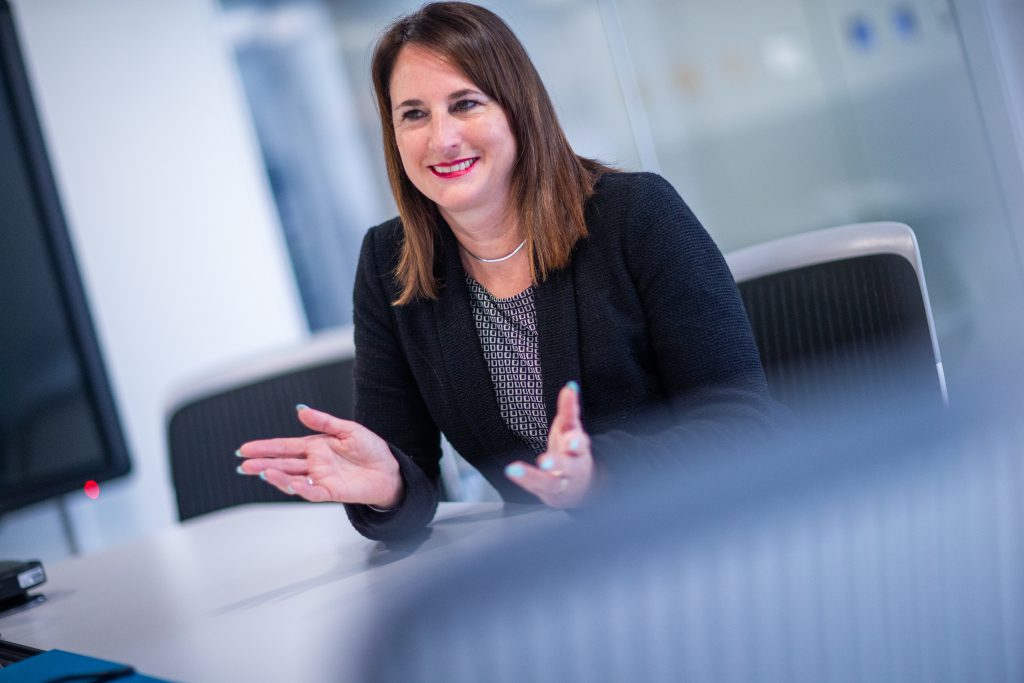
Cecabank has recently arrived in Luxembourg. What motivated the company to open a branch in the Grand Duchy?
We opened the branch based on the attraction of Spanish asset managers to being in Luxembourg. It is a cross-border market that attracts a variety of investors who leave Spain to open up to all kinds of markets. Cecabank offers custody and depositary services. On top of that, we are closely monitoring regulations on asset digitisation, we have received the MiCA licence and we would like to be part of that ecosystem.
According to their own data, 14% of the funds launched by Spanish and Andorran firms in the last five years have a Luxembourg ISIN. Why do you think interest in the country has increased?
Over the past five years, we have observed lots of growth, both in the number of asset managers launching funds in Luxembourg, and in the number of entities establishing themselves in the country. The first reason is internationalisation, but they also do it because of the ease with which funds can be established, with the help of the regulator. The main market is the UCITS, but alternative funds have seen a great deal of development over the last seven or eight years. In addition, actively traded ETFs are also experiencing significant growth. The regulation allows the creation of a UCITS fund, with a class below where there is an active ETF.
What type of asset manager would be most interested in Luxembourg? Have you noticed a change in recent years?
Previously it was large bank-owned asset managers, but we are seeing growth in medium and small asset managers, both bank-owned and non-bank-owned, who see a great opportunity to establish themselves in Luxembourg.
This interview is bound to be read by professionals who want to set up funds in Luxembourg. What steps should they take?
If the strategy and product type are well defined, the first approach should be with a law firm and then they should analyse who they would like to work with in Luxembourg. The funds need a depositary, a custodian, an administrator, a transfer agent, who handles the relationship with investors, and a Management Company (ManCO) or an AIFM, in the case of alternative funds. You also need to decide whether you want to build your own structure in Luxembourg, such as a ManCO or AIFM, or seek a third party to do it for you, which is recommended if you are not an experienced entity in this jurisdiction. The process to set up a fund takes between three and six months.
What difficulties might they encounter along the way?
They need to find good suppliers who are competitive in terms of supply and prices. Luxembourg is a fairly expensive market because the service is specialised and sophisticated. They must also take into account market knowledge and know how to distribute a product, which is not so easy. If the management company lacks a defined structure and strategy, they may go down the wrong path.
Once the fund has been deposited, what are the common mistakes made in the first year?
The first year is when asset managers perform best because they know where to focus their efforts. Difficulties arise with growth, as managing the workflow becomes more challenging. A lot of documentation is required, and it is essential to be organised in order to provide all the necessary information to the suppliers within the fund's ecosystem.
Returning to the topic of private markets, we see an increase in interest in the RAIF vehicle. What advantages does it have over its equivalent in the Spanish market, the SCR?
It is very easy to assemble, its structure is simple and it is unregulated. It does not need to go through the supervisor before launch, which greatly facilitates its establishment; it can be launched in about a month. Furthermore, it is open and can contain different compartments.
Do you foresee significant growth in structures related to private markets in Luxembourg?
The area where we are seeing the most growth is in RAIFs, especially for medium and small asset managers. Many entities are replicating their Spanish products in Luxembourg and are doing so in RAIF format to move out of their domestic jurisdiction and internationalise the fund. No time is wasted on constitution, supervision, or authorisation.